Highlighted Projects

Flight Schedule Reduction Web App
at Southwest Airlines
- Saved over $100M in its first year of use
- Continues to yield an annual eight-figure financial benefit
- Has been used in solving several major scheduling crises
I built an optimization tool that helps Southwest modify medium- to long-term flight schedules. The app allows network planners to cut flights and aircraft from the schedule in broad or precise ways. It finds profit-optimal solutions that balance the commercial, customer, and operational sides of the problem.
The app is used to address major challenges such as the Boeing 737 MAX grounding, the COVID-19 pandemic, pilot shortages, station exits, and recovery from the 2022 holiday meltdown. Other uses include "demand shaping" holidays, "freeing up" aircraft for higher-value redeployment, and small adjustments to match the schedule to available fleet.

Electroplating Scheduling Web App
for a metal plating facility
- Increased plant efficiency by 18% over manual scheduling
- Used daily to schedule orders, workers, and equipment
I developed software that schedules manufacturing at an electroplating facility. Working with the client, I designed an optimization model and heuristic that solved this large, custom "flexible job shop scheduling problem" in just a few minutes of runtime.
The app's savings allowed the company to hire a full-time operations research engineer to own and maintain the program going forward. The use of a leading, commercial-grade solver was evaluated as part of the work; while marginally better and faster, the improvement wasn't substantial enough to justify the cost, saving the client money.
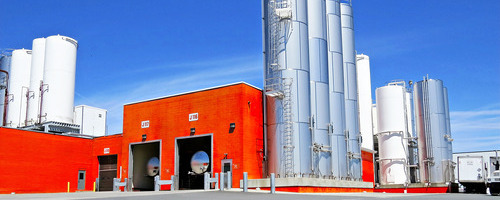
Juice Production Optimization
for a food manufacturer
- Delivered code to schedule production at a juice manufacturing plant
- Minimized logistics costs for the operation
I built a model that helps a large juice company optimize its supply chain, from the farm through to shipping finished goods from the processing center.
The tool minimizes transportation and demurrage costs, while ensuring finished goods leave the plant on time. The algorithm accounts for food safety guidelines governing how juice storage silos must be emptied, cleaned, and filled with product.
"I would happily hire Andrew again for any optimization projects and recommend him to anyone looking for an operations researcher. Andrew quickly understood the problem space and asked the right questions to design and build a solution," said Tim Cheung, CTO at Factory AI.

Seating Chart Generator and Staffing Tool
for Muse Paintbar
- Automated guest seating and staffing for painting classes
- Prioritized "better" seats for certain customers
- Kept groups together, seated next to complementary parties
I worked with the folks at Muse to solve two of their business problems with optimization. One model assigned customers to seats in their studio rooms, while another scheduled employees to the classes they're best-positioned to work.
"Andrew was a pleasure to work with - always making sure to communicate thoroughly and assist with any questions," said Peter Levin, CTO at Muse. "Andrew was a great partner on this project - thoughtful, thorough, and always pleasant. When we pursue our next optimization project, he will be the first person we seek out!"

Mutual Fund Rebalancer
at Dimensional Fund Advisors
- Used daily to balance multi-billion dollar mutual funds
- Replaced a manual, Excel-based process
I partnered with a colleague to build an app for portfolio managers at Dimensonal that optimizes how daily fund investments or divestments should be settled across a range of mutual fund products.
The app rebalances "fund of funds" products. The tool's objective is to apply cash flow in a way that brings a given fund closer to the target weights of its sub-funds, given that it naturally becomes misaligned each day with market movements. The web app pulls fund positions and various targets from a database each day and instructs how to maximally realign the fund.
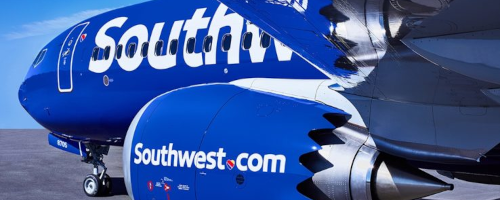
Refleeting Web App
at Southwest Airlines
- Was recently used to refleet 200 lines of flying in a single schedule
- Finds smaller, seven-figure opportunities to match supply to demand
I built an optimization tool that Southwest network planners can use to reassign the aircraft types of flights. The program assembles "new" lines of flying across many days, assigning larger aircraft to high-demand flights and smaller plane types to low-demand flights. It thinks about forecast revenue, costs, current booking levels, user guardrails, and schedule operability.
The tool was used to refleet Winter 2025/2026 when newly reconfigured aircraft were incorporated into the schedule (137 seats versus 143).

Fantasy Sports Optimization and Simulation
for a professional sports bettor
- Constructs optimal rosters for fantasy basketball betting
- Accounts for other bettors, yielding higher returns than other tools
Working with the client, I created a web app to build rosters of basketball players based on the expected performance of those players and various constraints.
The "most optimal" fantasy rosters tend not to provide the greatest financial returns due to repetition/overlap with other top bettors online. To account for this, "the field" of other bettor's rosters were simulated - against which more accurate expected returns of these promising rosters could be measured. The best-returning bets are actually "near optimal" in an environment awash with statistics, influencers, and well-funded bets tilting the playing field.
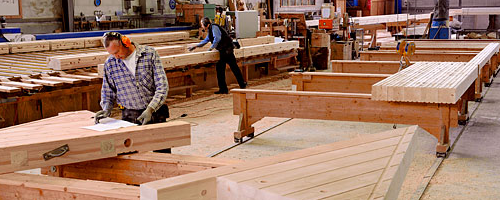
Inventory and Production Planning
for an outdoor furniture manufacturer
- Used to generate demand forecasts for the upcoming year
- Builds production and inventory plans to meet highly seasonal demand
I created a decision-making model that forecasts inventory needs and prioritizes daily production for a furniture manufacturing facility.
The client sells an enormous breadth of seasonal products, across many sales channels, yielding extremely variable and spiky demand patterns. Despite the challenges, I developed a strategy for producing, inventorying, and forecasting customer orders. The method was backtested using the orders of prior years. A set of business success metrics - such as product availability and inventory turn targets - were met or exceeded using the approach.

Block Time Tool
at Southwest Airlines
- Used to establish flight durations for all scheduled flights since 2022
- Replaced an Access-based process that had reached the end of its lifecycle
I led a team in building an app that establishes scheduled flight times at Southwest. The network planning department uses the tool when building upcoming schedules.
A custom algorithm determines how long a flight should be scheduled based on season, day of week, time of day, and other factors. A ton of historical data are assembled from both Southwest and other airlines in making the calculations - and planners make adjustments at the airport and individual route levels when needed.

Soccer Data Scraper
for a youth sports enthusiast
- Pulls and compiles youth league soccer data
- Organized and queryable data are used to derive team and player insights
I made a program that assembles and stores soccer data for a client.
The data set, from a leading sports organization, is refreshed regularly. Team rosters, player stats, tournament performance, and detailed game outcomes can be tracked over multiple years. The information is useful for competitive analysis, and to identify top players as they progress through the league.